Discover TÜV-certified GoogleTest with Agentic AI for C/C++ testing!
Get the Details »
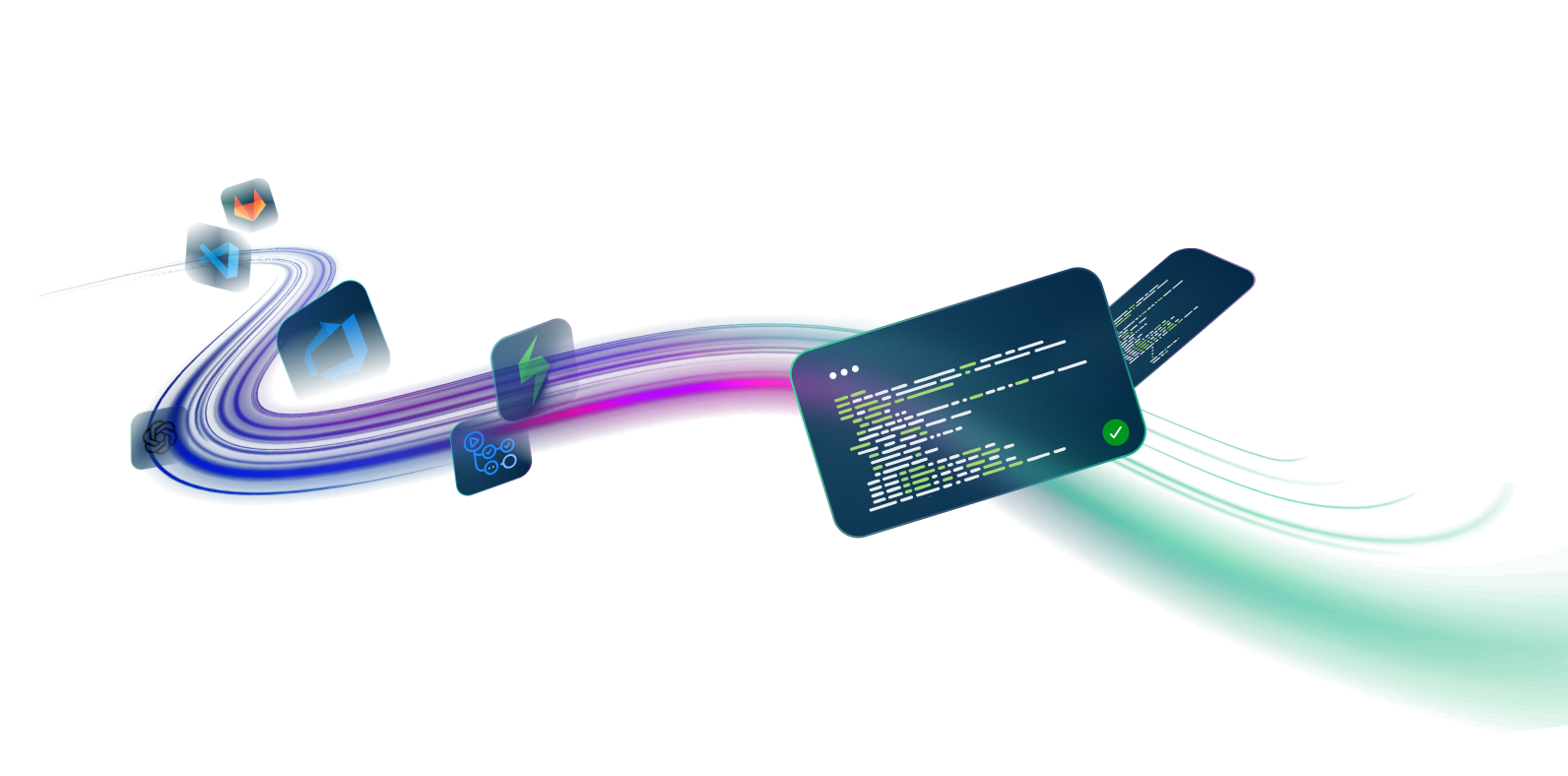
Explore the testing solutions built for how you deliver software.
Accelerate your entire development cycle with AI-driven testing. Create, maintain, execute, and remediate faster—improving quality at speed.

Use AI to prioritize code violations, generate code fixes, and help your team increase code quality and compliance while reducing technical debt.
Generate tests, boost coverage, and reduce manual effort across diverse software systems with AI.
Scale API automation instantly. Use agentic LLM-based AI to generate tests from chat, or create them automatically from recorded traffic.
On-prem AI automatically fixes UI tests after app changes, reducing flakiness, maintenance, and ensuring accuracy with human-in-the-loop review.
AI-driven coverage reveals gaps and strengthens tests. Test impact analysis uses the same insights to target only impacted tests for faster feedback.
Use AI to rapidly generate API scenario tests, and codelessly expand test cases to meet security and performance requirements.
Build virtual test environments and intelligent API mocks in minutes with agentic AI and natural-language-based generation.
Perform static analysis & unit testing for C/C++ code.
CT for C/C++ code coverage; requirements traceability.
Conduct Java unit testing & static analysis.
Manage test suites for API, load, & security testing.
Create, deploy, & manage virtual assets & test data.
As software evolves, so should your testing strategy. Blend human insight with built-in AI to validate quality at speed.

Comprehensive testing for complex software

Certified testing for critical objectives

Complete analysis for safety, security, and reliability

Code reliability for safety-critical software

Acceptance metrics for assured code quality

Comprehensive traceability and verification

Fine-tune quality at every stage.

Optimized workflows for continuous Java quality

Find defects before they postpone releases.

Rapid feedback, faster iterations

Infuse AI-enhanced quality at every step.

Simulate any environment or complex system.

Test only the code that changed.

Unlock fast, reliable test data on demand.
Fine-tune quality at every stage.
Catch issues while coding.
Find bugs early, fix fast.
Infuse Al-enhanced quality at every step.

Self-healing tests, low maintenance
Simulate any environment or complex system.
Test only the code that changed.
Integrate quality effortlessly. Parasoft connects with your essential tools, frameworks, and pipelines to accelerate testing within your workflow.


Reduce risk and improve software quality with our award-winning, AI-powered solutions, proven across decades of complex deployments.
WoodmenLife cut regression testing from 200 hours to only 40 hours—3 times faster than manual testing.


WoodmenLife transformed its testing, slashing workflows from weeks to minutes and accelerating releases with Parasoft, achieved over $845K in ROI across 13 releases.


Kitea Health ensured the reliability of the world’s first brain implant, achieving zero field-found bugs while accelerating development by 25% with Parasoft’s automated testing.
Kitea Health consistently achieves 99-100% verifiable code quality and coverage, generating the auditable proof required for regulatory compliance.
Critical Software You Fly, Bank, and Explore With—Tested on Parasoft





Innovation thrives when we connect, share, and learn from each other. Join our community to:


Hit your software quality, safety,
and security targets every time.